

For the scaling fintech entrepreneur, a payment processing disruption is not just a technical inconvenience; it's a catastrophic event that halts revenue, damages brand reputation, and erodes user trust.
Reliance on a single acquirer or Payment Gateway is the most common critical point of failure in the industry.
Acquirers can change their compliance policies overnight, suffer technical outages, or unilaterally adjust their risk appetite.
If your business depends on a single "pipe," you are delegating your operational stability to a third party.
What is Payment Orchestration and how does it ensure operational resilience?
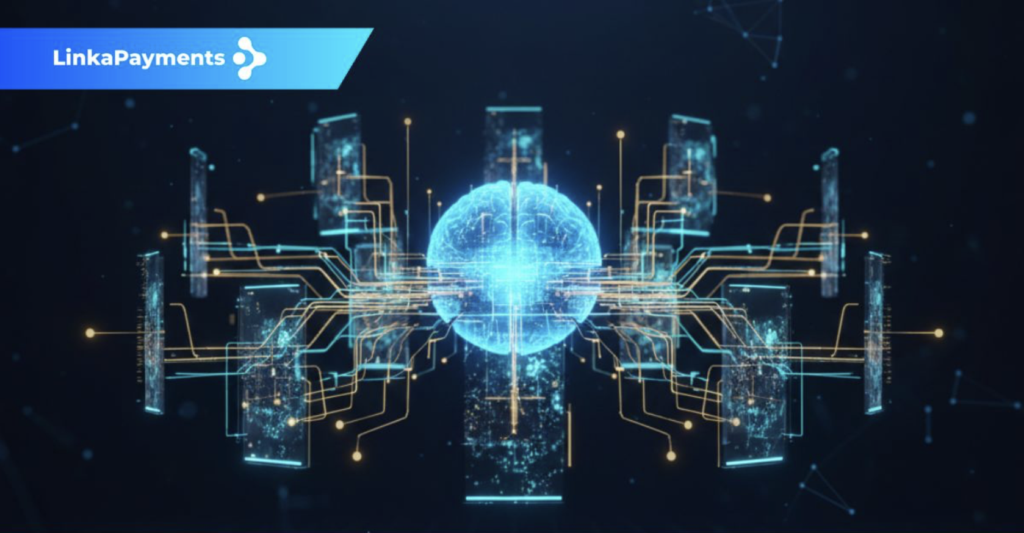
Payment Orchestration is not just another gateway; it is the intelligent infrastructure layer that sits between your application and multiple providers (acquirers, PSPs, EMIs).
It acts as the central nervous system of your transactions through four technical pillars:
- Smart Routing and automatic failover: The platform monitors the health of each connection in real time. If it detects high latency or downtimeIt automatically redirects traffic to a secondary provider. It's a system of High availability imperceptible to the user.
- Load balancing (load distribution): It allows distributing the transaction volume among several acquirers based on business rules, optimizing approval rates and respecting the volume caps of each entity.
- Integration abstraction: It frees you from technical dependence. You only need to integrate once with the orchestratorAnd this gives you access to the entire payments ecosystem, drastically reducing the vendor lock in.
- Unified observability: A single dashboard to analyze the performance, response times, and reasons for rejection of all your suppliers in aggregate.
🚀 Don't wait until your main gateway goes down to look for an alternative. Design a resilient architecture today and protect your revenue stream. 👉 Evaluate your infrastructure's resilience with our consulting service.
Strategic advantages of a Multi-Acquirer infrastructure
Implementing a multi-acquirer strategy through payment orchestration offers benefits that go far beyond avoiding downtime:
- Dramatic improvement in the authorization rate: By directing each transaction to the acquirer with the highest probability of success based on the BIN or geography.
- Negotiating power: By not being tied to a single supplier, you improve your position to negotiate rates and commercial terms.
- Accelerated Time-to-Market: Expanding into new regions or adding local payment methods is managed from a single technical layer.
💡 Build on a solid foundation and scale without limits. Payment orchestration is the engine that enables leading fintechs to dominate international markets. 👉 Discover our Payment Orchestration platform for Fintechs.
FAQs about payment orchestration
No. While volume accelerates ROI, stability and strategic agility are vital for any growing fintech. Modern platforms offer scalable models that eliminate the existential risk of relying on a single provider from day one.
On the contrary. A orchestrator A well-designed system adds only milliseconds, an imperceptible amount that is more than compensated for by the higher approval rate and the elimination of the risk of downtime prolonged.
Diversification is key. Ideally, you should have a primary acquirer for your core market, one specializing in alternative payment methods or specific regions, and a third as a high-availability backup.
Design today the infrastructure your fintech will need tomorrow
If you're building a fintech with ambitions of scaling, postponing the decision on payment architecture is gambling with your company's future.
Implementing Payment Orchestration should be viewed not as an expense, but as a fundamental investment in infrastructure, as critical as your database or your authentication system.
Does your payments stack have a single point of failure? The time to design for resilience is now, during the growth phase. 👉 Contact a LinkAPayments expert now